DBT Interpersonal Relationship Skills - Body Language and Dialectical Thinking
When learning to use DBT interpersonal relationship skills you will need to be aware of your body language. You also will need to think dialectically and communicate clearly. If you are not, you will not make a good impression on the people you are trying to connect with.
https://www.oceanrockrecovery.com/
Communicate clearly
Assertive communication is an important skill to develop if you are dealing with interpersonal relationships. It requires you to set up a clear and direct request for what you need. You should also be aware of your body language and your tone of voice. This will help you to appear confident and effective in your communication.
The best way to practice assertive communication is through individual activities. There are several exercises and worksheets that you can use to improve your skills.
If you are having a difficult conversation, remember to take a break before continuing the discussion. Be sure to listen to the other person's point of view. Take time to formulate an appropriate response. Remember to be open to negotiation and compromise.
A common mistake people make when they are dealing with others is to try to overpower them. When this happens, it can cause them to react in a way that they don't want. For instance, they may lash out in anger or defensiveness. Alternatively, they may walk away from the situation, leaving you feeling unsatisfied.
Think dialectically
Dialectical thinking involves the systematic and ongoing integration of knowledge. It differs from formal operations in that the latter relies on a closed system of lawful relationships, while dialectics involves open-system models.
Dialectical thinking has a history in human development. In the early twentieth century, Jean Piaget developed a theory of genetic epistemology. He proposed that knowledge could be obtained by finding the balance between opposing forces.
Dialectical thinking is also used in postmodern psychology. Some authors emphasize that the nature of interpersonal relationships is multi-faceted, and thus should be characterized as a social system.
One of the major breakthroughs in the study of dialectical cognition was the idea that relationship variability is an essential component of it. This helps to explain why dialectical thinking works to help people achieve a greater level of equilibrium.
The third element of dialectical theory is praxis, which refers to the simultaneous subject-and-object nature of human experience. A fourth element is totality, which describes how an entity evolves over time and how it interrelates with its surroundings.
Be aware of body language
Being aware of body language in a DBT interpersonal relationship can be an important skill. It can help you get a better idea of the emotions that others are feeling and can also improve your relationships.
Body language is a critical part of communication in any business or relationship. Whether you are dealing with your manager, spouse, or co-workers, body language can be a great tool for identifying the way that others are feeling.
If you are interested in a relationship, you can use body language to show that you are willing to work for the relationship. For example, holding a hand in your pocket can indicate that you are comfortable with the situation. Hand gestures can also indicate a variety of feelings. However, excessive hand gestures are often a sign of hostility.
If you are trying to negotiate a situation, you should avoid changing topics abruptly. Also, you should keep your voice low and your facial expressions gentle. This can make you seem more approachable and will help you feel more connected to the other person.
Practice skills with strangers, loved ones, pets
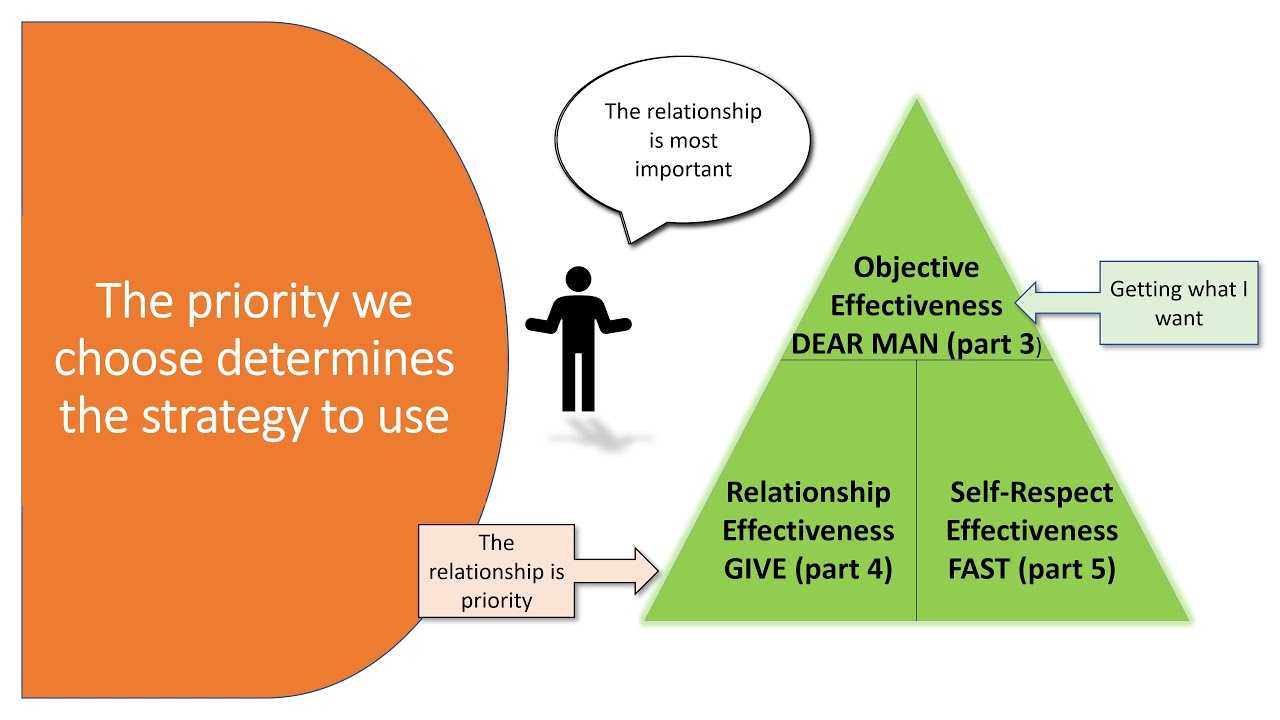
The Interpersonal Effectiveness skills that are taught in Dialectical Behavioral Therapy (DBT) can help build positive relationships. However, many people have difficulties maintaining healthy relationships. DBT helps to improve interpersonal relationships by teaching respect for self and others. To successfully learn the skills, it's important to practice them in real-life situations.
For example, when you have a difficult conversation, a light-hearted approach can reduce tension. You can also give special attention to a person, letting them know that you appreciate them. This will help you maintain the relationship. Also, you can appreciate a person's accomplishments by giving them a compliment. It's also important to validate your feelings. By recognizing your own feelings, you can avoid becoming defensive.
If you're dealing with unstable emotions, you may have trouble maintaining a good relationship. But with the right approach, you can get through your struggles. DBT's skills can help you to develop the confidence to handle difficult situations. Learning and practicing these skills can lead to healthier relationships and more confidence.